Closing the gender health gap: our role as biopharma leaders
 Steph Plowright / 25 November 2025
25TH NOVEMBER 2025
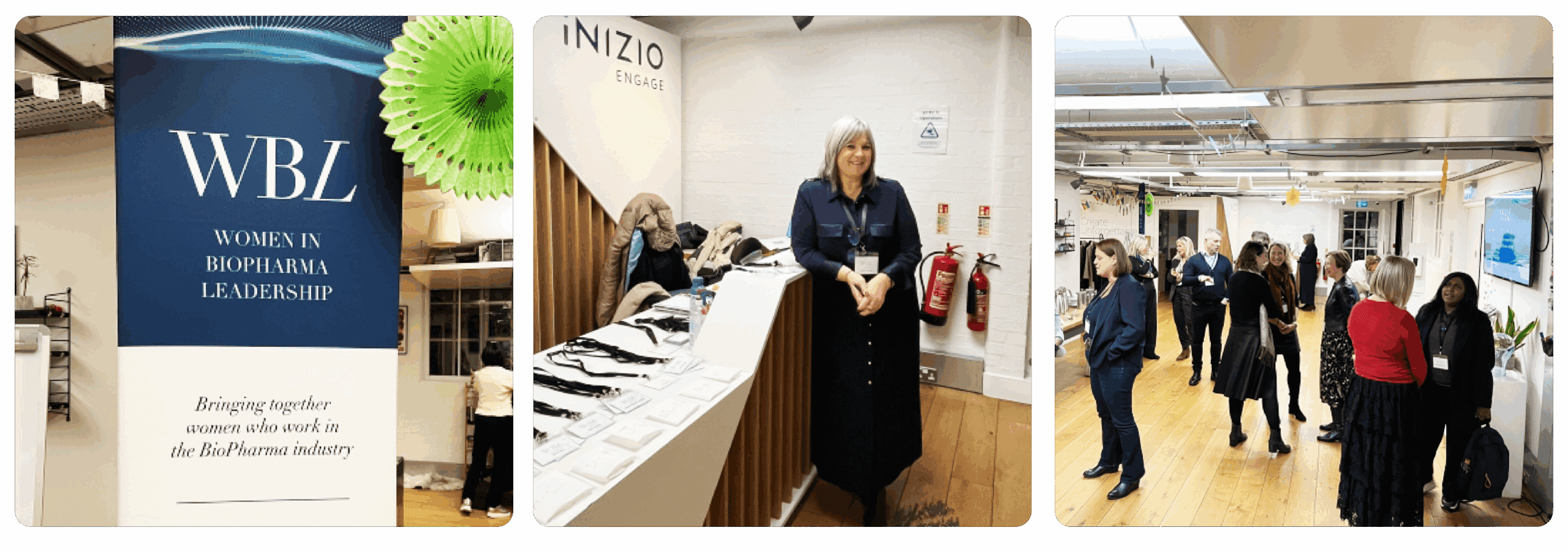
Last week, leaders from across the life sciences industry came together for our latest Women in Biopharma Leadership (WBL) event to tackle a critical question:
What is our role, as biopharma leaders, in closing the gender health gap?
When most people hear “women’s health”, they think of menopause, fertility and gynaecological cancers. Yet these women-specific conditions represent only a small fraction of the total health burden. Far more comes from conditions that affect everyone, but where women experience higher incidence, delayed diagnosis, different treatment pathways or worse outcomes – including cardiovascular disease, dementia, migraine and autoimmune conditions.
Closing that gap is both a moral imperative and a significant economic opportunity, with the potential to unlock sizeable productivity gains and value for health systems and societies.
The session was hosted by Catherine Bacon (Founder & CEO, FingerPost), with Nazare’s very own Steph Plowright opening the discussion on behalf of the Women in Biopharma Leadership network. Our panel brought together three complementary perspectives. Dr Vasilisa (Vaska) Sazonov sits at the intersection of clinical trials and commercial strategy, using data to argue for better representation. Winsome Cheung brings an investor and deal-maker’s view of where capital is – and isn’t – flowing in women’s health. And Tina Backhouse, who has held senior roles advising on women’s health at the interface of industry and government, brought a policy and health equity perspective grounded in real-world patient pathways.
And with the topic being as important as it is, we voted not to operate our usual Chatham House Rule – empowering everyone in the room to share what they’ve heard and amplify how change can be made.
Rethinking what we mean by “women’s health”
A core theme of the evening was the need to move beyond a narrow view of women’s health.
Much of the inequity sits in conditions that affect both men and women, but where women carry a disproportionate burden or experience poorer outcomes without an obvious biological reason. This is where the gender health gap is most stark.
Winsome highlighted how this misperception shapes strategy and capital allocation. If women’s health is seen as niche, defined only by reproductive topics, it is easy for investment decisions to deprioritise it. Once you look at the broader picture – from cardiovascular disease to autoimmune conditions – a different story emerges:
- A significant “white space” where industry has under-innovated for women.
- A missed commercial opportunity, with estimates suggesting that closing the gap could unlock substantial economic value over the coming decades.
Her challenge to the room was to think beyond short-term brand survival and ask: What future state are we trying to build – and how can we start investing towards it now?

The data gap: representation and real-world impact
Vaska focused on the role of data and clinical research.
Even in high-profile conditions, women are often under-represented in pivotal trials compared to their real-world prevalence. That has consequences for:
- How confident we can be about the safety and efficacy of treatments in female populations.
- The evidence base informing guidelines and prescribing.
Some obstacles are structural – exclusion criteria that don’t reflect women’s real health profiles, or blanket rules around women of childbearing age. Others are operational: under pressure to recruit quickly, teams often following the “path of least resistance” unless a more inclusive approach is purposely built in.
Vaska’s message was that leaders who sit at the table where trial and portfolio decisions are made have real influence. Her advice:
- Know the numbers: who is represented, who isn’t, and what that means.
- Translate representation into commercial language for your key stakeholders – forecast robustness, differentiation, risk management – or, in her words, “follow the money”.
- Make it real: who are the patients, what are their stories, what is the impact if we get this wrong?
If we want colleagues to listen, we need to make the case that more inclusive trials are not just the right thing to do, but the smart thing to do.
Pathways, prevention and women’s ability to self-advocate
Tina brought the discussion down to the lived reality for women in the system.
We heard how often symptoms are minimised or normalised – heavy periods written off as “just part of being a woman”, repeated GP visits (at least 8) before menopause symptoms are recognised, or chronic pain attributed to stress. For many, this leads to:
- Delayed diagnosis of conditions such as endometriosis.
- Limited access to appropriate support during menopause.
- A longer life expectancy, but more years spent in poorer health.
Tina emphasised two levers:
- Patient pathways that work harder for women
Many conditions could be picked up and managed earlier in primary care if pathways, tools and services were designed around women’s needs – for example, access to the right diagnostics and joined-up visits that consider multiple aspects of women’s health. - Education and self-advocacy
From school-age PSHE through to digital information and community engagement, women and girls need to know what is not “normal” – for example, missing several days of school or work each month due to periods, or assuming cardiovascular risk is only a male issue. Having and being able to access the right information will empower women, of any age, to recognise when something is wrong and push for answers.
For Tina, closing the gender health gap is inseparable from helping women to be heard – and that is something every part of biopharma can contribute to, whether through trial design, patient materials, health professional education or advocating for change as a leader.
Leading change from where you are
Alongside system-level themes, the panel spoke candidly about what it means to lead change within organisations.
Winsome shared her personal reflections from mentoring younger women in biotech and in-house roles centred on three things:
- Be clear on your goal – for your role, your project, your career.
- Map the gatekeepers: who really decides, formally or informally?
- Build narratives that speak directly to what those gatekeepers care about.
Vaska echoed this in the context of cross-functional working. Every function around the table – from clinical development and medical to commercial and market access – has its own objectives. If you can show how addressing the gender health gap helps them achieve those objectives, you will gain traction.
The path is rarely linear. “Squiggly” would be more appropriate. The skill lies in staying strategic and persistent, even when the route isn’t straightforward.
The conversation also touched on the ever evolving and important role of AI.
AI and data as accelerators – or amplifiers of bias?
On one hand, AI offers the ability to process and analyse clinical and real-world data at a scale we could never manage before – surfacing patterns in outcomes, adherence, side-effects and access across gender and other factors.
On the other, if women are missing or mis-represented in the underlying datasets, AI risks embedding existing inequities more deeply.
For biopharma leaders, the opportunity is to:
- Ensure the data we collect genuinely reflects the populations we serve.
- Use AI deliberately to spot and challenge inequity, not simply to automate current practice.
Key takeaways
As the evening drew to a close, each panellist left us with a clear message:
- Tina: We all have a responsibility to support women in advocating for their health, whatever our role in the industry so find out what that means for you.
- Vaska: Understand what drives your colleagues and stakeholders – and frame closing the gender health gap in terms of how it helps them achieve their goals.
- Winsome: Be clear on your goal, be strategic in how you pursue it, and keep going despite the noise around you.
Closing the gender health gap will not be solved by a single initiative, trial or policy. But it will be shaped by the thousands of choices made every day in organisations like yours, and ours – by how we design studies, where we invest, how we engage customers and patients, how we lead our teams, and which voices we choose to amplify.
What steps are you going to take to help close the gender health gap in your role?
If you’d like to hear more about future WBL events or connect with the network, please sign up for notifications below.
Women in Biopharma Leadership is a network for like-minded female leaders in the Pharma and BioTech industries run in partnership by Nazare and Links Life Sciences. The network’s mission is to provide our community with a space that enables opportunities for growth through connection, personal development and the sharing of expertise.
To hear more about our future events or connect with the WBL network, please head to our LinkedIn group.

Sign-up here.
Next article
Jump to a slide with the slide dots.
 Steph Plowright
The future of pharma engagement is hybrid – but not how you think
Read more

Nazaré Launches Access Academy, a Training Solution to Help Navigate the Complexities of Patient Access in the US
Nazaré, an Inizio Engage learning & capability brand, has announced the launch of Access Academy
Read more
 Lauren Gregory
From Insight to Impact: How Strengths-Based Coaching and Development Transforms Leadership
Discover how strengths-based coaching helps leaders boost engagement, inclusion, and team performance with proven leadership development strateg...
Read more Lauren Gregory
How we’re using SDI to help top sales leads demonstrate active listening
Discover how SDI helps sales leaders improve active listening under pressure, build trust with customers, and respond to what truly matters.
Read more
The Future of Field Excellence – New 2026 report coming soon
Discover new research on the future of field excellence in life sciences. Insights from 100+ leaders on field engagement, capabilities, and industry..
Read more